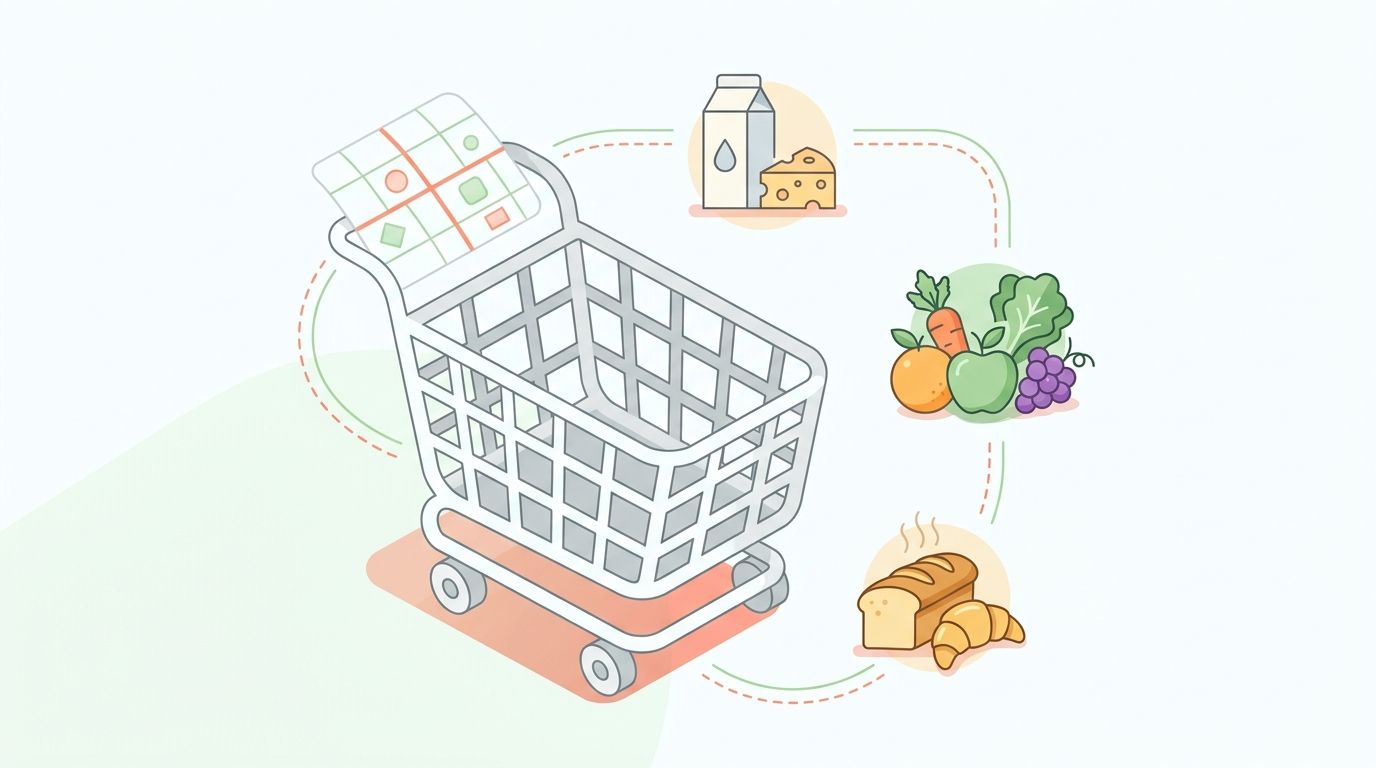
A photo went mildly viral on Reddit this week: a French Intermarché supermarket printed the entire store map — every aisle, every department, dairy, wine, bakery, checkout — directly onto the handle of its shopping carts. Thousands of upvotes, hundreds of comments, and one recurring reaction: why doesn't every store do this?
The answer, as the comment section quickly worked out, is that most stores don't want to. A shopper who knows exactly where the milk is walks straight to the milk and leaves. A shopper who has to search for it walks past the bakery, the wine aisle, and three end-cap promotions first — and picks up two or three things they didn't come in for. That's not an accident. It's why milk sits in the far back corner of nearly every supermarket, and why aisles get reshuffled every few months for no reason a regular customer can ever spot.
It's a clever piece of design from that one French store. It's also a reminder of how fragile the idea is. A cart with a painted map only works until the store rearranges the yogurt section — which, according to the same thread, happens constantly, often overnight, sometimes without the staff being told either. One commenter described spending an entire shift wandering the store trying to find items for online pickup orders, because the layout had changed since the last time they'd looked. Printed maps go stale. Store layouts don't hold still.
A grocery list has the same problem — unless it's smart about it
This is exactly the problem a good grocery list app is built to solve, and it can do it better than paint on a cart handle, for one simple reason: it doesn't depend on the store's cooperation.
Most list apps stop at "add item, check it off." That's fine until you're standing in the store with fifteen things on your list in whatever order you thought of them, and you end up crossing the store four times because the eggs and the milk were three aisles apart and you wrote them one after the other.
Apps that organize by store go a step further: group the list by aisle or department, so it reads in the order you'll actually walk through the shop — produce, dairy, frozen, household. Some go further still and let you set that order per store, since no two supermarkets shelve things the same way. A Carrefour and a Monoprix disagree on where to put the pasta.
The tradeoff most apps run into is upkeep. A fixed aisle order is really a map, and maps go out of date the moment a store resets a shelf — the exact failure the Reddit thread was making fun of, just moved from painted cardboard to an app's settings screen. The apps that hold up are the ones that let you nudge the order yourself in a few seconds when something's moved, instead of assuming the layout is permanent. It's the same idea as the cart with the printed map, minus the part where it stops working the day the store repaints the aisle signs.
What this looks like in practice
Say you're doing a weekly shop with a list built from a recipe, plus a few household basics. Without any sorting, it's a flat list in whatever order you typed it — cereal, dish soap, chicken, bananas, laundry pods, milk. You're zigzagging.
Sorted by store layout, the same list becomes: produce (bananas), meat (chicken), dairy (milk), then the far side of the store for cereal, dish soap, and laundry pods. One pass, no backtracking.
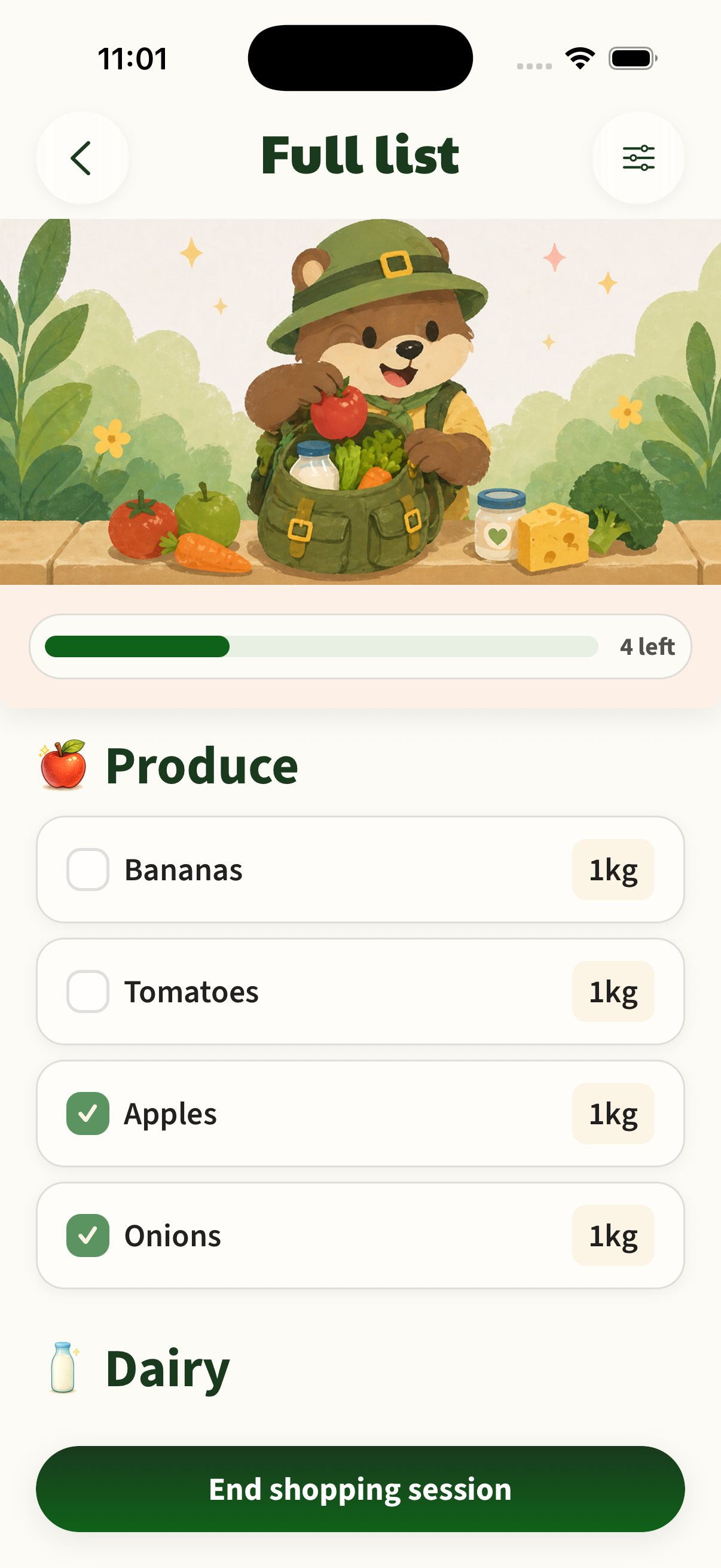
That's the whole idea behind Carto's store-based sorting: your list rearranges itself to match how you actually move through a specific store, and you can drag things around when a store changes something — no repainting required. It's a smaller, quieter version of what that French cart handle was trying to do, except it fits in your pocket and updates in five seconds instead of never.
The bigger picture
The Reddit thread's honest answer to "why don't all stores do this" was, essentially: it isn't in their interest to make your trip shorter. That won't change. But it means the responsibility for a fast, low-friction grocery run has always sat with the shopper, not the store — and a list that organizes itself by aisle is a much more reliable tool for that than hoping the next store you walk into happens to have painted a map on the cart.